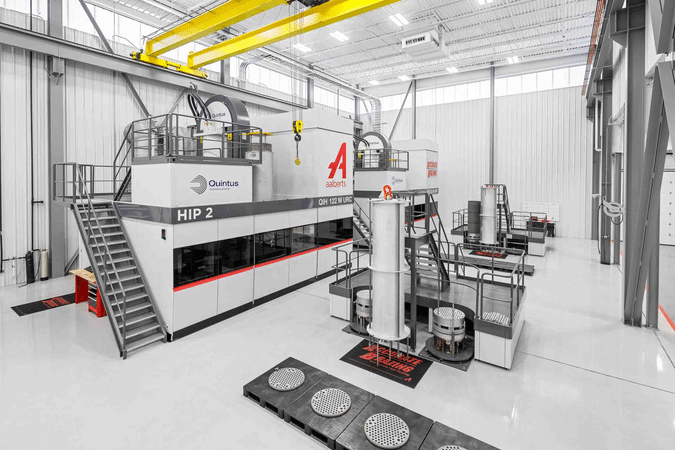
Powder metallurgy is transforming the manufacturing world, providing precise and efficient solutions that industries rely on. Central to this advancement is the sintering process in powder metallurgy. This process allows for producing intricate and durable parts that meet the high standards of sectors such as aerospace, automotive, and consumer electronics. Emphasizing the sintering process in powder metallurgy, this method shapes the production of parts with unmatched precision, fulfilling stringent requirements. For those curious about modern manufacturing techniques, understanding the sintering process in powder metallurgy is essential to unlocking the possibilities that powder metallurgy offers. Readers interested in innovative manufacturing practices will find this exploration both insightful and practical.
How the sintering process in powder metallurgy works
The sintering process in powder metallurgy is a critical advancement that involves heating powdered material to just below its melting point. This technique facilitates particles bonding without liquefying, forming a strong, cohesive product. The initial stage involves powder compaction through a die, resulting in the desired shape. Following compaction, the powder enters a furnace for sintering. Key advantages of this process include:
- Sintering increases material strength.
- The process conserves energy by avoiding full melting.
- Sintered items often require little to no machining.
- This method can produce parts with intricate geometries.
- It offers uniform density and consistent quality.
In the furnace, the sintering process relies on precise temperature control and atmosphere regulation, which are vital for preventing oxidation and ensuring optimal material characteristics. The result is a component with enhanced mechanical properties and precise dimensions, underscoring the importance of selecting the right materials and conditions for successful sintering in various industries.
Applications and benefits of sintering in powder metallurgy
The sintering process in powder metallurgy has gained traction in fields requiring high-volume production of complex, robust components. In the automotive industry, for instance, sintering facilitates the production of gears and bearings with minimal waste. Similarly, aerospace applications benefit from the process’s ability to produce lightweight yet sturdy parts. The electronics sector uses sintering for components that must maintain their shape and function under high thermal constraints.
Several factors make the sintering process attractive:
The ability of the sintering process in powder metallurgy to produce near-net-shape parts with minimal material waste underscores its economic and environmental advantages. Reduced need for secondary machining further amplifies cost-effectiveness. As industries continually seek methods to enhance sustainability and reduce manufacturing waste, powder metallurgy, with its core sintering process, offers impressive potential. Thus, understanding and advancing the sintering process can lead to innovative applications and sustainable practices across sectors.
Innovations and future of the sintering process
Technological advancements are expanding the possibilities of the sintering process in powder metallurgy, enabling new levels of efficiency and effectiveness. Innovations in material science now allow sintering to occur at lower temperatures, cutting energy use while preserving product quality. With the exploration of new alloys and composites, the applications for sintered materials continue to grow. As research and development drive progress, the significance of sintering in advanced manufacturing becomes increasingly evident.
hipping stands as a leader in exploring these innovations, committed to pushing the boundaries of powder metallurgy. For those eager to delve deeper into the sintering process in powder metallurgy, their website offers valuable insights. Visit www.hipping.eu to discover how hipping leverages cutting-edge technology to enhance manufacturing processes. Engage with hipping to explore how sintering techniques can elevate production capabilities and meet industry demands.


